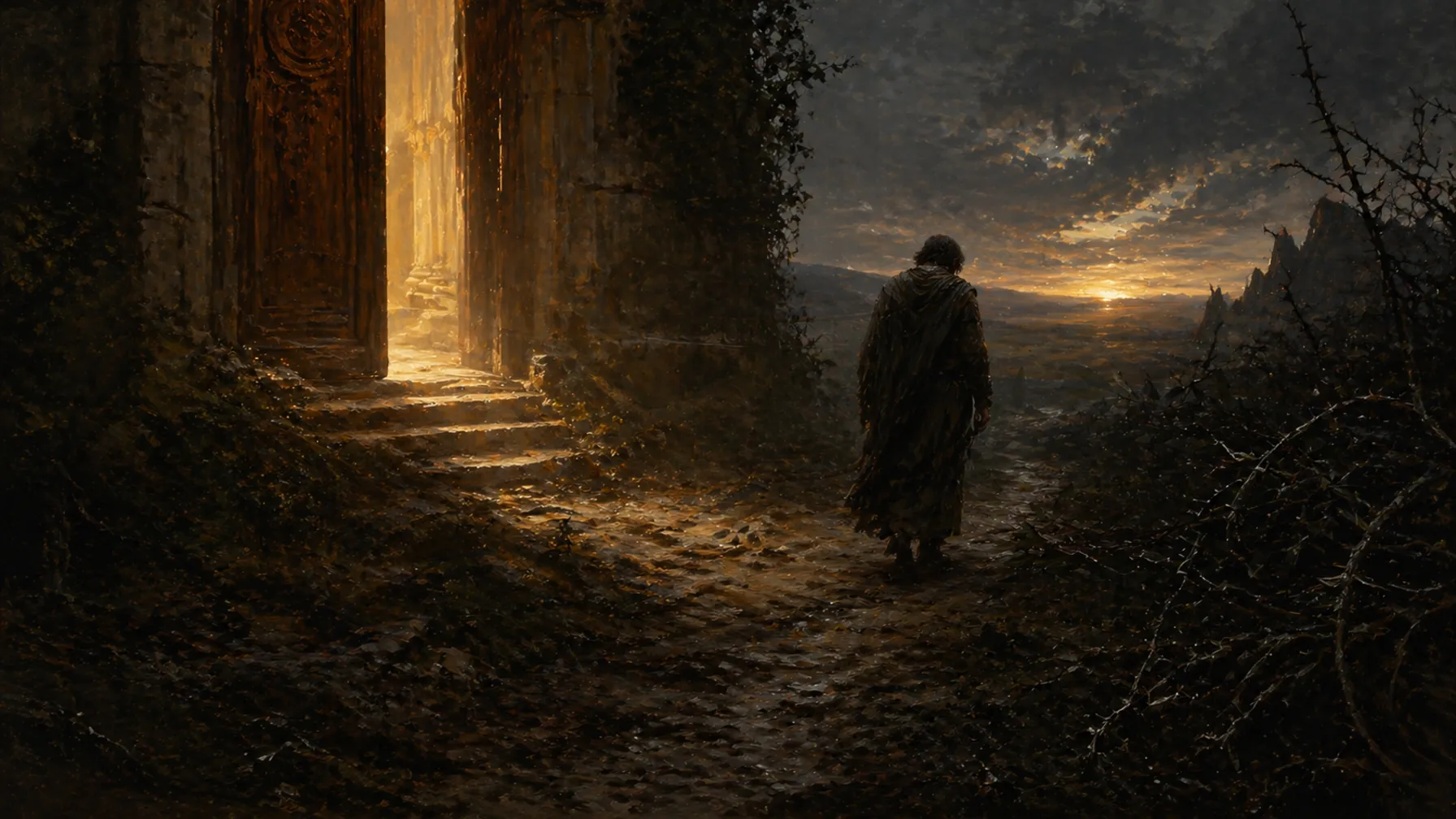
Original sin has two parts worth separating: original corruption, a nature bent away from God from birth, and original guilt, the standing humanity has in Adam, which Romans 5:12-19 sets out. It does not claim that people are as evil as they could possibly be, and common grace restrains much of it. It matters because 1 Corinthians 15:21-22 frames the gospel as Adam and Christ in parallel.
Every generation of parents notices the same thing. You do not have to teach a child to lie. You do not have to model selfishness, or demonstrate how to want what belongs to someone else. These things show up on their own, early, in children who have had no particular training in any of it. The doctrine of original sin is not a pessimistic view of humanity. It is an honest reading of what we actually observe.
The biblical case
Romans 5:12-19 is the primary text. Paul writes: "just as sin came into the world through one man, and death through sin, and so death spread to all men because all sinned." The connection between Adam's act and universal human sinfulness is Paul's argument. In verses 18-19 he draws the parallel explicitly: "as one trespass led to condemnation for all men, so one act of righteousness leads to justification and life for all men. For as by the one man's disobedience the many were made sinners, so by the one man's obedience the many will be made righteous."
David's confession in Psalm 51:5 adds the personal dimension: "Behold, I was brought forth in iniquity, and in sin did my mother conceive me." He is not accusing his mother of wrongdoing. He is tracing his own moral condition back to the beginning of his existence. Paul confirms this in Ephesians 2:3: we were "by nature children of wrath," not merely by behavior.
What the doctrine claims
Original sin has two elements that are important to distinguish. The first is original corruption: every human being is born with a nature that is bent away from God, inclined toward self, and morally unable to consistently choose the good without divine grace. This is universally affirmed across Protestant traditions.
The second element is original guilt: whether Adam's guilt is directly imputed to all his descendants from the moment of conception. This is where the traditions diverge. Augustinian theology (reflected in Reformed and many Lutheran confessions) holds that guilt as well as corruption is transmitted. Wesleyan-Arminian theology typically holds that corruption is transmitted but that guilt is only incurred through actual personal sin, with prevenient grace covering the inherited corruption. Both positions take Romans 5 seriously and draw different conclusions about what Paul means by "all sinned" in verse 12.
What the doctrine does not claim
Original sin does not mean that human beings are as evil as they could possibly be, what theologians sometimes call "absolute depravity." Common grace restrains the worst expressions of sin in human society. People do genuinely good things, love their children, act with courage and generosity. The doctrine is that sin corrupts every dimension of human nature (mind, will, and affections) so that none of us naturally seeks God or comes to him without his initiative (Romans 3:10-11). The corruption is total in scope, not total in intensity.
The doctrine also does not erase human responsibility. Adam's descendants sin because of a corrupted nature, but they also sin freely, choosing what they want. The nature inclines; the will chooses. Both are true, and both matter.
Why it matters
First Corinthians 15:21-22 frames the whole gospel in terms of Adam and Christ: "For as by a man came death, by a man has come also the resurrection of the dead. For as in Adam all die, so also in Christ shall all be made alive." The doctrine of original sin is not a gloomy footnote to the gospel. It is the problem for which Christ is the answer. Strip it away and you reduce the gospel to moral improvement advice for people who are basically fine.
Understanding original sin also explains why the Christian life requires more than education or effort. It explains why habits form so easily in the wrong direction and why even the most disciplined believer still wrestles. The corruption is not fully removed at conversion. It is being progressively addressed by the Spirit, and will be completely resolved only at glorification.
This week, read Romans 5:12-19 with your group and ask: what does Paul's Adam-Christ parallel tell us about why the solution to sin had to be a person, not a program?
Terms in this article
Every passage each one appears in, with the definition attributed to its source.
Keep reading

Salvation
Regeneration vs Sanctification: What Is the Difference?
Regeneration happens once and God does it alone. Sanctification takes a lifetime and you participate. Why confusing the two discourages new believers.
Salvation
What Sin Actually Is
Sin is not mainly a list of bad behaviors. What Psalm 51, Jeremiah 2 and Romans 1 each add, and why the diagnosis decides the remedy.

Salvation
Sanctification, The Long Walk
Why forty years in can still feel like slow progress. The two errors that cut the walk short, and why mortification is active rather than passive.


