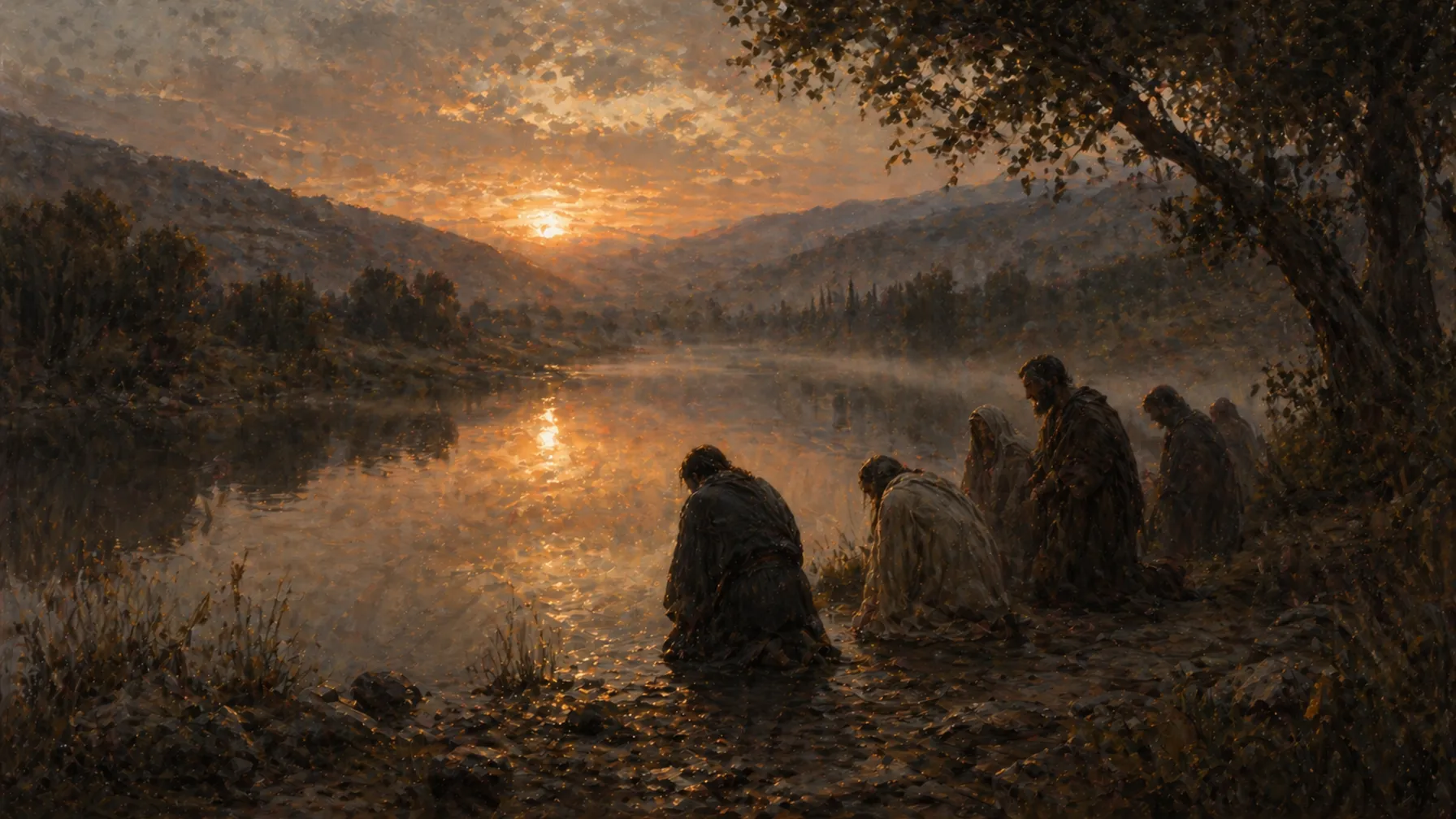
Both traditions read baptism as a sign of union with Christ's death and resurrection (Romans 6:3-4), and neither holds that the water saves. The disagreement is over who is baptized: credobaptists follow the Acts pattern of profession before baptism, paedobaptists read the household baptisms and covenant continuity. Mode follows from that question rather than settling it.
Two devout Christians, both with Bibles open, disagree about baptism. Neither is indifferent to Scripture. Neither is dismissing the other's tradition without thought. One was baptized as an infant in a Reformed church. The other was immersed as a believer in a Baptist church. Both point to texts. Both believe they are being faithful. This is not a case of conviction versus laziness. It is one of the most durable intra-evangelical debates in church history, and it is worth understanding why.
What baptism means
Both traditions agree on the core meaning. Romans 6:3-4 is common ground: "Do you not know that all of us who have been baptized into Christ Jesus were baptized into his death? We were buried therefore with him by baptism into death, in order that, just as Christ was raised from the dead by the glory of the Father, we too might walk in newness of life." Baptism signifies union with Christ's death and resurrection. It marks entry into the body of Christ and declares allegiance to him. The dispute is not over what baptism points to. It is over who receives it and in what manner.
The question of who is baptized
The credobaptist (believers' baptism) case rests on the pattern of the Great Commission and its fulfillment in Acts. Matthew 28:19-20 sequences discipleship before baptism: "make disciples of all nations, baptizing them." Acts 2:41 records that "those who received his word were baptized." The sequence is consistent: hear, believe, receive the Spirit, be baptized. Baptism follows profession, not precedes it. On this reading, baptizing infants reverses the apostolic order.
The paedobaptist (covenant/household baptism) case runs through the covenant structure of Scripture. Circumcision was the covenant sign given to infants in Abraham's household; Colossians 2:11-12 links baptism to circumcision as its New Testament counterpart. Acts 16:33 records the baptism of the Philippian jailer's entire household after his conversion, suggesting the sign was applied to those within the family covenant. On this reading, restricting baptism to adults breaks the covenant continuity between testaments and withholds from covenant children what circumcision gave to Israelite infants.
The question of how
On mode, the immersionist case draws on Romans 6:4 (buried with him, raised with him) and the meaning of the Greek verb baptizo, which in many contexts suggests submersion. Going under and coming up enacts the death-and-resurrection symbolism at the heart of baptism's meaning. Mode is not incidental. It is the meaning made visible.
The case for pouring or sprinkling runs through different imagery. Ezekiel 36:25-27 describes the Spirit's coming as a sprinkling of clean water. Acts 2 records three thousand baptisms in one day in Jerusalem, a city with limited water sources, suggesting the water was poured rather than immersed in. The Didache, written in the early second century, allows pouring "in the name of the Father and of the Son and of the Holy Spirit" when immersion is not possible. Mode is not incidental on this view either, but the primary symbolism is washing and anointing, not burial.
Why this does not have to divide
The disagreement is real. Neither side is simply being careless. Both traditions share the core convictions that matter most. Baptism is a sign of grace. It points to Christ. It marks entry into the visible community. It is commanded by Christ himself. Both hold that baptism does not save but signifies what the gospel does. Both are reading Scripture with care and arriving at different conclusions about which texts are decisive.
People have worshipped together across this divide throughout church history, and they continue to. The pastoral task is to hold your own conviction clearly, understand why Christians you respect hold a different one, and not make the rite into a wall where Scripture did not build one.
This week, read Romans 6:3-4 with your group and then ask which texts from each tradition feel most weighty to you, and why.
Terms in this article
Every passage each one appears in, with the definition attributed to its source.
Keep reading
Leading and Teaching
What the Church Is
Body, bride, household, temple. Four New Testament images for the church, and what each says that "I can worship anywhere" cannot.
Last Things
The Bodily Resurrection
Paul said that without the resurrection the faith is worthless. Why bodily matters, what firstfruits means, and what a non-bodily version would lose.

Last Things
New Heavens, New Earth
The Bible does not promise an escape from the earth. Isaiah 65, Romans 8 and Revelation 21 describe settlement, and it changes what work is worth.


