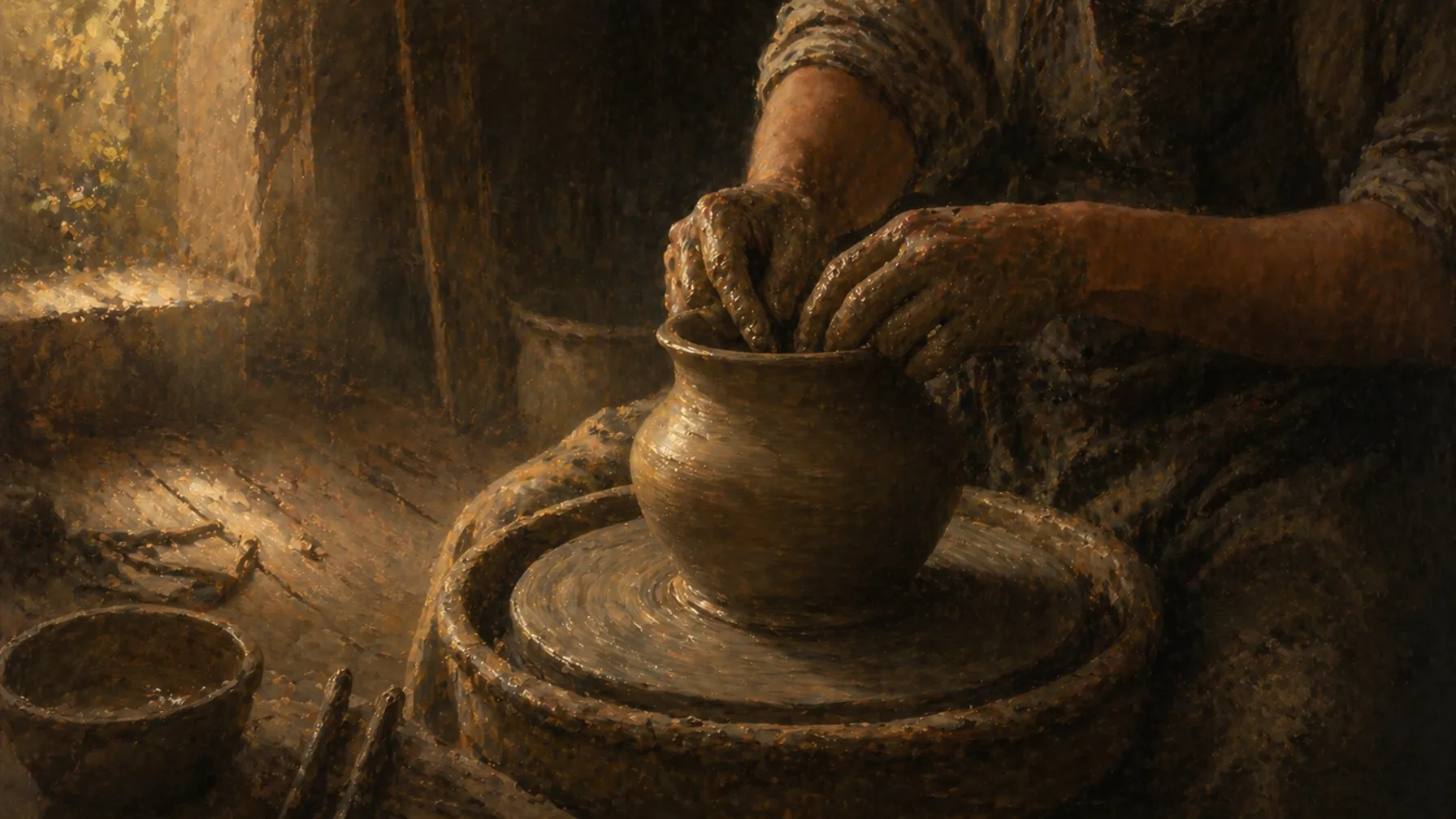
Genesis 1:26-27 grounds human dignity in status rather than capacity, which is why it holds for the infant, the unconscious and the dying. The body is not incidental to it: Scripture never treats the real person as a soul temporarily housed in flesh. Sin defaces the image without destroying it, and Colossians 1:15 names Christ as its true bearer.
There is a moment in a neonatal ward when a nurse hands a premature infant to a parent for the first time. The child cannot speak, cannot work, cannot contribute anything. She weighs less than a paperback book. And yet no one in that room doubts that she matters. The question worth pressing is: why? On what basis does a being with no demonstrated capacity, no social utility, no record of achievement command that kind of attention? The answer Scripture gives is not sentimental. It is theological. It begins in Genesis 1.
The declaration at the beginning
Genesis 1:26-27 is the most compressed and consequential statement about human beings in the Bible. "Then God said, 'Let us make man in our image, after our likeness. And let them have dominion over the fish of the sea and over the birds of the heavens...' So God created man in his own image, in the image of God he created him; male and female he created them." The threefold repetition of "image" in two verses is deliberate. Moses is not padding his prose. He is insisting on a reality he does not want the reader to miss.
What the image includes has occupied theologians for centuries. At minimum it encompasses rationality, the capacity to know and reason. It includes moral accountability, the ability to respond to God's commands and be held responsible for those responses. It includes relationality, a point confirmed by the immediate creation of the man and the woman together. God himself exists in the eternal communion of Father, Son, and Spirit. Those made in his image are made for relationship, not isolation. The image also includes vocation. Verse 28 follows the declaration with a commission: "Be fruitful and multiply and fill the earth and subdue it, and have dominion." Image-bearing is an active calling, not a passive state.
The body is not incidental
One persistent distortion in Christian history is the idea that the "real" human being is a soul temporarily housed in a body, and that the body is either irrelevant to the image or a hindrance to spiritual life. Genesis will not support that reading. God forms man from the dust and breathes life into him (Genesis 2:7). The body is not a prison from which the soul awaits release. It is the vehicle through which image-bearing creatures inhabit, care for, and exercise dominion over the physical world.
Psalm 8 confirms this. "You have made him a little lower than the heavenly beings and crowned him with glory and honor. You have given him dominion over the works of your hands; you have put all things under his feet" (Psalm 8:5-6). The psalmist stands under a night sky and feels the weight of two contradictory realities at once: human smallness ("what is man that you are mindful of him?") and human dignity ("you have crowned him with glory and honor"). Neither cancels the other. The creature who is small is also the creature who is crowned. That crowning is not purely spiritual. It is exercised through physical bodies making, building, cultivating, and governing in the material world.
Sin defaces but does not destroy
The fall complicates this picture without erasing it. Genesis 3 records the fracture, and its effects run in every direction: shame, relational hiding, labor under the curse, death itself. What sin does to the image is defacement, not erasure. The evidence is in Genesis 9:6, given after the flood to Noah: "Whoever sheds the blood of man, by man shall his blood be shed, for God made man in his own image." The prohibition on murder is grounded, not in social contract, but in the continued dignity of image-bearers. Post-fall humanity, violent and broken as it is, still carries something that makes shedding human blood an offense against the Creator whose image the victim still bears.
James 3:9 makes the same point from a different angle: "With it we bless our Lord and Father, and with it we curse people who are made in the likeness of God." The tongue that curses a neighbor is cursing someone who still bears God's likeness. No category of person is exempt. Not the elderly person whose mind has frayed. Not the unborn child who has not yet drawn breath outside the womb. Not the prisoner, the refugee, or the person whose productivity has dropped to zero. Dignity is not earned. It is given in the act of creation and survives the ravages of the fall.
Christ as the true image
The New Testament takes the imago Dei and presses it into Christology. Colossians 1:15 calls Christ "the image of the invisible God, the firstborn of all creation." Where Adam bore the image and bent it through disobedience, Christ is the image in its fullness. He is not merely an example of what image-bearing looks like. He is the original from which the pattern comes. To see the Son is to see what humanity was always meant to be, and beyond that, to see the Father himself (John 14:9).
That is why Paul's account of salvation is, underneath everything, an account of image restoration. Colossians 3:10 describes the new self as one "being renewed in knowledge after the image of its creator." The word "renewed" implies that something real was damaged and is now being repaired. The goal of sanctification is not moral improvement toward an abstract standard. It is conformity to the image of Christ (Romans 8:29), which is the image of God himself. The arc of redemption runs from image-bearers made, through image defaced by sin, to image restored in Christ.
What this demands of us
A doctrine this foundational is not content to remain in the lecture hall. The imago Dei makes claims on how we treat people, especially people whose dignity is easy to overlook. The infant in the neonatal ward. The man living under a bridge. The woman in the memory care unit who no longer recognizes her children. None of them can produce what our culture recognizes as value. All of them bear the image of the God who made them and whose Son died to renew that image in them.
The vocation of stewardship that began in Genesis 1 is not cancelled by the fall. It is redirected by the gospel. Those who are being renewed in the image of their Creator are the same people called to exercise dominion, now understood as service rather than exploitation, as care for the creation rather than consumption of it. The dignity we receive is inseparable from the responsibility we carry.
This week, ask your group to name one person in their life whose dignity they find it hard to see clearly, and then sit with Genesis 1:27 long enough to let it reframe what they see.
Terms in this article
Every passage each one appears in, with the definition attributed to its source.
Keep reading
Christian Life
Prayer Grounded in Truth
The Lord's Prayer puts God's agenda before human need on purpose. What each movement is doing, and what to pray when God feels absent.

Christian Life
Dealing With Doubt
Doubt is not one problem but three. How Thomas, John the Baptist, and the disciples at the tomb each doubted differently, and how to respond.
Christian Life
How to Start Reading the Bible: What to Read First
Start reading the Bible with Mark, a seven-day passage plan, and one question a day. Learn what to read next and what to do when you get confused.


