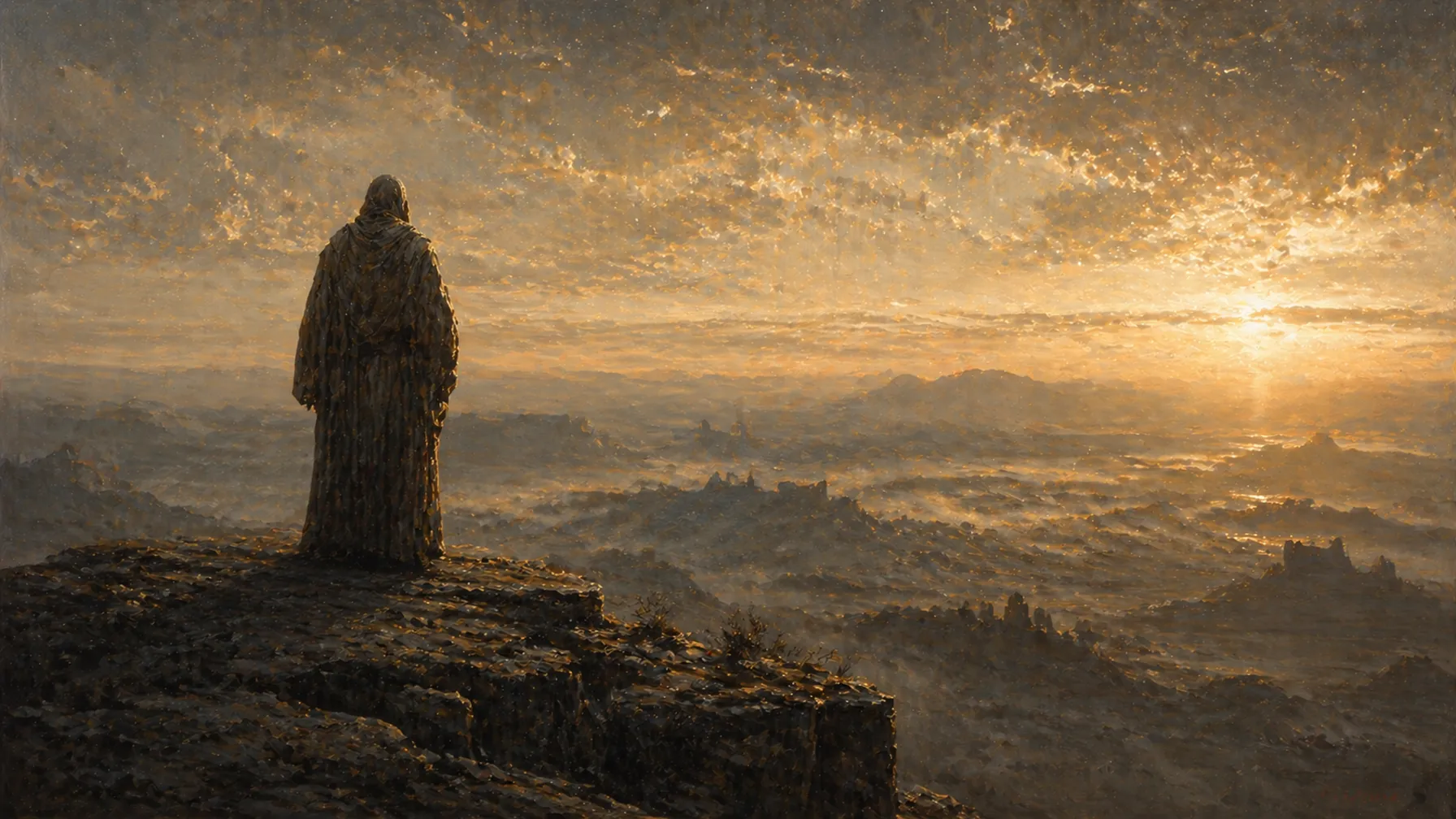
The claim rests on texts that say it directly rather than on inference. John 1:1 places the Word with God and as God. Colossians 1 has all things created by him and the fullness of deity dwelling in him. Hebrews 1:3 calls him the exact imprint of God's nature. In John 8:58 Jesus takes the divine name, and in John 20:28 Thomas calls him God and is not corrected.
When Jesus returned to Nazareth after beginning his ministry, the crowd looked at him and asked, "Is not this the carpenter?" (Mark 6:3). They knew his hands. They had seen him work. The question was not really about his trade. It was about his limits. Whatever they expected, they did not expect this: the man who had built their furniture had also built the universe.
The Word who was God
John opens his Gospel not with a birth announcement but with a statement about eternity: "In the beginning was the Word, and the Word was with God, and the Word was God" (John 1:1). Three clauses. The first places the Word at the origin of all things. The second distinguishes him from God the Father. The third identifies him as God. Distinct and yet divine, both in the same sentence.
Then John 1:14: "And the Word became flesh and dwelt among us." The Greek word for "dwelt" is eskenosen, pitched a tent. It echoes the tabernacle, the place where God's glory resided among Israel. John is saying that the same divine presence that filled the wilderness tabernacle now walked in sandals on Galilean roads.
Firstborn and fullness
Paul's letter to Colossae reaches for some of the most elevated language in the New Testament. The Son is "the image of the invisible God, the firstborn of all creation. For by him all things were created, in heaven and on earth, visible and invisible" (Colossians 1:15-16). Firstborn here is not a birth-order claim. In the Old Testament, the firstborn held the place of supremacy and inheritance. Psalm 89:27 uses the same title for David: "I will make him the firstborn, the highest of the kings of the earth." Preeminence, not origin.
Two verses later Paul adds: "For in him all the fullness of God was pleased to dwell" (Colossians 1:19). Not some of the fullness. Not a representative portion. All of it.
Exact imprint
Hebrews opens by placing the Son at the center of all revelation. God spoke through prophets in various ways, "but in these last days he has spoken to us by his Son" (Hebrews 1:1-2). Then the writer reaches for a specific word: the Son is "the exact imprint of his nature" (Hebrews 1:3). The Greek term is character, used for the mark left when a seal is pressed into wax. The seal and the impression are not the same object, but they bear the same likeness perfectly. God and the Son are not the same person. They share the same nature completely.
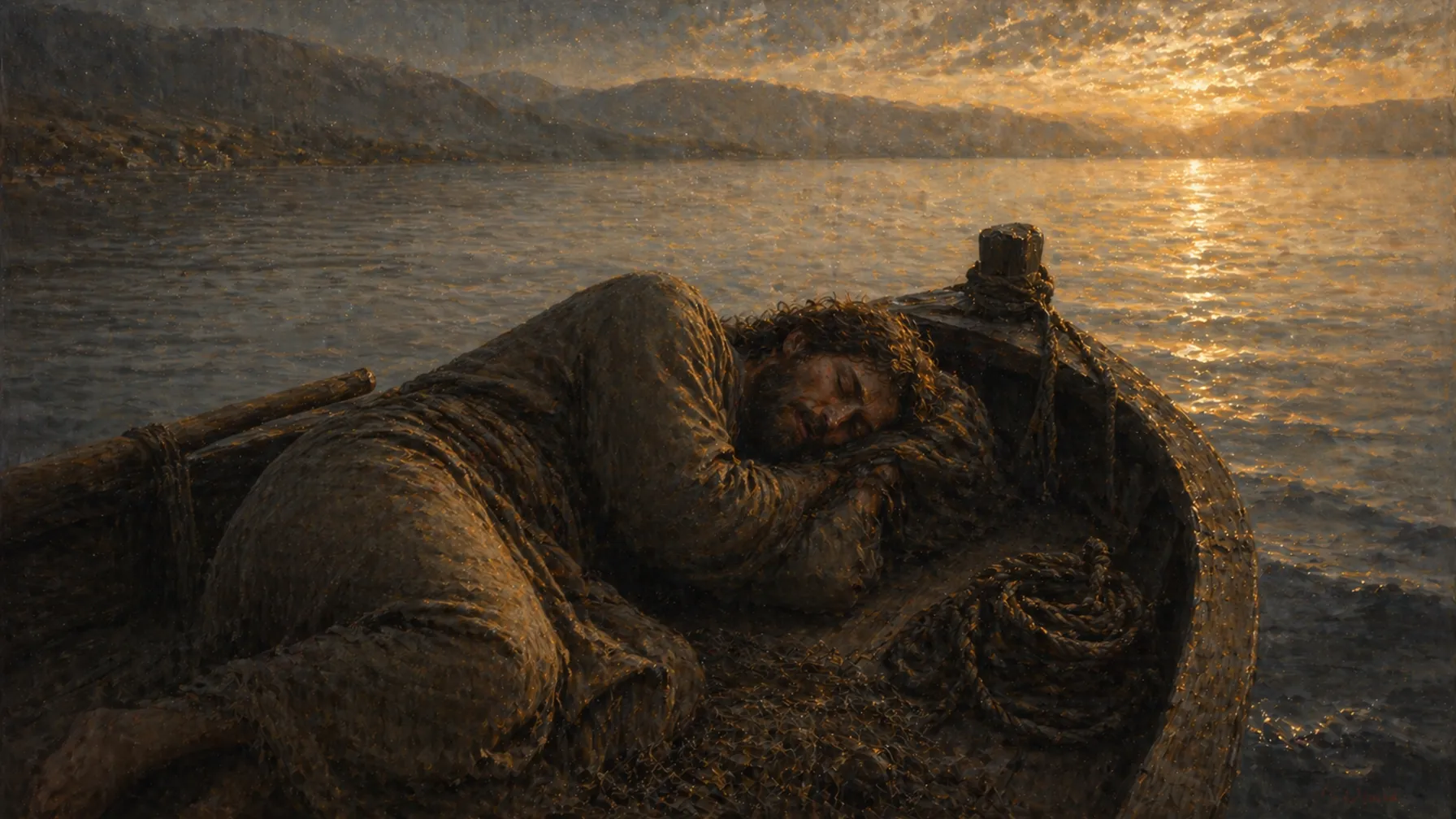
That same verse says the Son "upholds the universe by the word of his power." The man who fell asleep in a boat on the Sea of Galilee is at the same time sustaining that sea's existence. Both true at once.
Before Abraham was
John 8 records one of the most dramatic exchanges in the Gospels. Jesus's opponents accuse him of being less than fifty years old and claiming to have seen Abraham. Jesus answers: "Truly, truly, I say to you, before Abraham was, I am" (John 8:58). The grammar is deliberate. He does not say "I was." He uses the present tense for what should be the past. This is the language of Exodus 3:14, where God tells Moses his name is "I am who I am." The crowd understood exactly what Jesus was saying. They picked up stones. You do not stone someone for claiming longevity.
My Lord and my God
After the resurrection, Jesus appeared to the disciples and accepted their worship (Matthew 28:17). When Thomas saw him, he said, "My Lord and my God!" (John 20:28). Jesus did not correct him. He accepted the title. This matters because Scripture is careful about worship. When John fell at the feet of an angel in Revelation, the angel stopped him immediately: "You must not do that! I am a fellow servant... Worship God" (Revelation 22:9). Jesus accepted what the angel refused. He was not acting out of character.
Why this is not a secondary question
Paul writes that "there is one mediator between God and men, the man Christ Jesus, who gave himself as a ransom for all" (1 Timothy 2:5-6). A mediator stands between two parties. To bridge the gap between a holy God and sinful humanity, the mediator must be able to represent both. He must be fully human to stand in our place. He must be fully divine to pay an infinite debt and to make the transaction count before God.
Arius taught in the fourth century that the Son was the first and greatest of God's creatures, subordinate in being. The Council of Nicaea in 325 AD rejected this not because it was philosophically untidy but because it gutted the gospel. If Christ is less than God, he can build our furniture. He cannot carry our sins.
This week, put John 1:1-14 alongside Colossians 1:15-20 and ask your group a single question: what kind of person could these texts be describing?
Terms in this article
Every passage each one appears in, with the definition attributed to its source.
Keep reading
Doctrine of God
The Trinity
One God in three persons, from the texts rather than the councils. Where the doctrine starts, and what it changes about prayer and salvation.
Doctrine of God
The Humanity of Christ
He was tired, hungry, and wept. Why the physical humanity of Jesus is load-bearing rather than decoration, and what Chalcedon actually settled.
Doctrine of God
Four Gospels, One Christ
Tatian merged the four Gospels into one and the church rejected it. What each writer emphasizes, and why four accounts strengthen the case.


