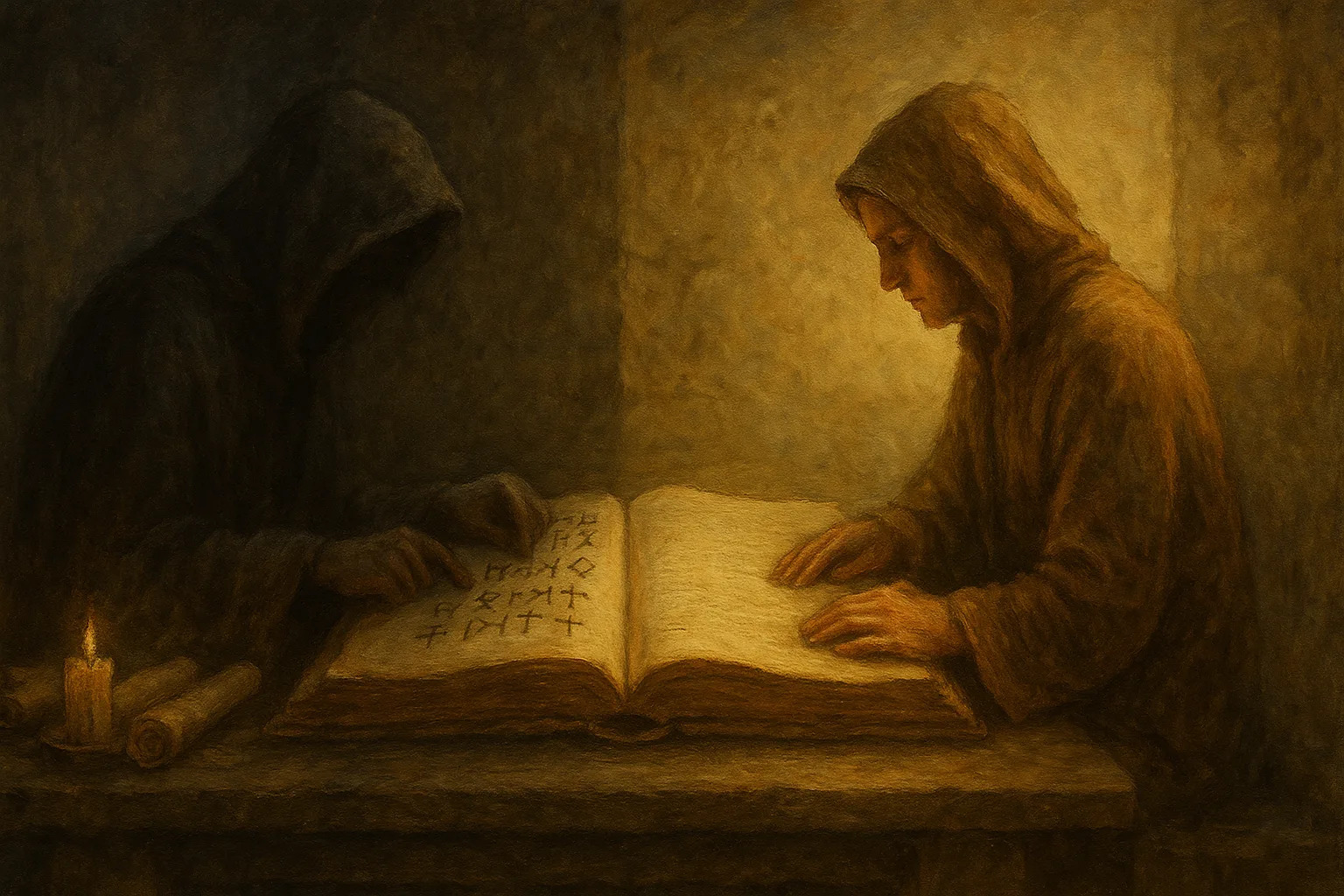
Exegesis means drawing out what the author actually said; eisegesis means reading your own meaning into the text. The difference is direction. Eisegesis rarely feels dishonest from the inside, which is what makes it dangerous: the reader finds what they brought with them and mistakes it for what Scripture said.
Handle the Word with reverence
Paul once wrote to Timothy, "Do your best to present yourself to God as one approved, a worker who does not need to be ashamed, rightly handling the word of truth" (2 Timothy 2:15). Those words weren't aimed only at scholars or preachers. They were a reminder to every believer that handling Scripture rightly is sacred work, work that can either build faith or quietly distort it.
What is eisegesis?
There's a subtle but serious way many of us approach the Bible. We read it to confirm our ideas, to back up what we already believe, or to find verses that comfort our point of view. We search not for what God said but for what we hope He said. Theologians call this eisegesis: reading ourselves into Scripture instead of drawing truth out from it.
Can sincere readers still get it wrong?
Eisegesis isn't always malicious. Most of the time it's born out of good intention, a desire to make sense of things, to find relevance, or to defend what feels true to us. Its danger lies in how quiet and convincing it is. It sounds spiritual, even biblical, while it slowly reshapes God's Word to fit our expectations. The moment we do that, the Bible stops transforming us and starts echoing us.
What does exegesis require of you?
Exegesis does the opposite. It draws truth out of the text rather than pouring our own meaning into it. It begins with humility, with the question, "What did the author intend, and what would the original audience have understood?" It respects both divine inspiration and human authorship: Scripture is fully God's Word, yet written through the language, culture, and emotion of real people. Exegesis asks us to step into their world instead of dragging them into ours.
When interpretation rewrites God
The danger of eisegesis is that it doesn't just distort words. It distorts God Himself. When we twist the text, even slightly, we begin to form a version of God who conveniently agrees with us. History has seen this more than once. In the 18th and 19th centuries, Scripture was used to justify slavery, not because the Bible condones it, but because people forced their cultural prejudice into it. The verses were there. The meaning was not. That's what happens when we make Scripture serve our bias rather than confront it.
What are common examples of eisegesis?
The same thing happens in subtler ways today. People pull verses out of context to support personal visions, political ideologies, or end-times predictions. Revelation is the obvious example: every generation finds its "mark of the beast," from barcodes to microchips, depending on what current fear dominates the news. John's original audience would never have understood it that way. They lived under Roman persecution, surrounded by symbolism that made perfect sense in their time and culture. What was once a letter of hope becomes, in our hands, a book of speculation.
Why does context settle the meaning?
That's what happens when we forget that context is king. The words of Scripture live within history, geography, language, and culture. To read them rightly, we have to care about what they meant then before deciding what they mean now. This isn't about complicating the Bible. It's about honoring how God chose to communicate. He spoke through real people, in real places, with real words that carried weight in their moment.
Reverent study
That's why the study of Scripture requires reverence, not just curiosity. Proverbs 1:7 says, "The fear of the Lord is the beginning of knowledge." The word "fear" here doesn't mean terror. It means awe. It's the kind of humility that says, "I don't get to decide what this means. I get to discover what it means." Without that reverential awe, study becomes self-affirmation instead of revelation.
The heart of self-reading
At its root, eisegesis is a form of self-idolatry. It puts our thoughts above God's thoughts, our preferences above His truth. It uses the Bible as a prop rather than a voice. You can quote Scripture all day and still be deaf to what it's actually saying.
The posture of exegesis
Exegesis begins with submission. It's the discipline of listening before speaking, of letting the text correct us before we use it to correct others. It's slower, harder, and often more uncomfortable. That's what makes it holy, not in a mystical sense but in the biblical sense of being set apart for God. When we approach Scripture with that kind of reverence, study itself becomes worship.
Misdirected worship
The danger of eisegesis isn't just bad interpretation. It's misplaced worship. A Bible that always agrees with us is no longer the Word of God. It's the word of man dressed in sacred language. The only safe way forward is to let Scripture speak for itself, even when it disagrees with us, even when it challenges everything we thought we knew.
Come with awe
The Bible doesn't need our opinions to make it relevant. It only needs our reverence to make it clear. When we come to it humbly, with awe and honesty, we find not just information but transformation. We find the God who still speaks, not because He was ever silent, but because our ears finally hear.
For eisegesis caught in the act, the Verses in Context series takes verses that are routinely read backwards and puts each one back in its passage. Start with Philippians 4:13, or with the phrases that turn out not to be in the Bible at all.
Sources
- 2 Timothy 2:15 · Rightly handling the word of truth
Terms in this article
Every passage each one appears in, with the definition attributed to its source.
Keep reading

Hermeneutics
Word Studies Done Right
The dunamis-means-dynamite claim is wrong, and so is agape versus philia. How to run a Greek word study that holds up.
Hermeneutics
Why Bible Context Matters
A verse means one thing and applies many ways. What "our citizenship is in heaven" meant to a Roman colony, and why context is not optional.

Hermeneutics
Common Interpretive Errors
Proof-texting, allegorizing, over-applied promises, and flattening narrative into a moral. The errors that ruin teaching before anyone speaks.


