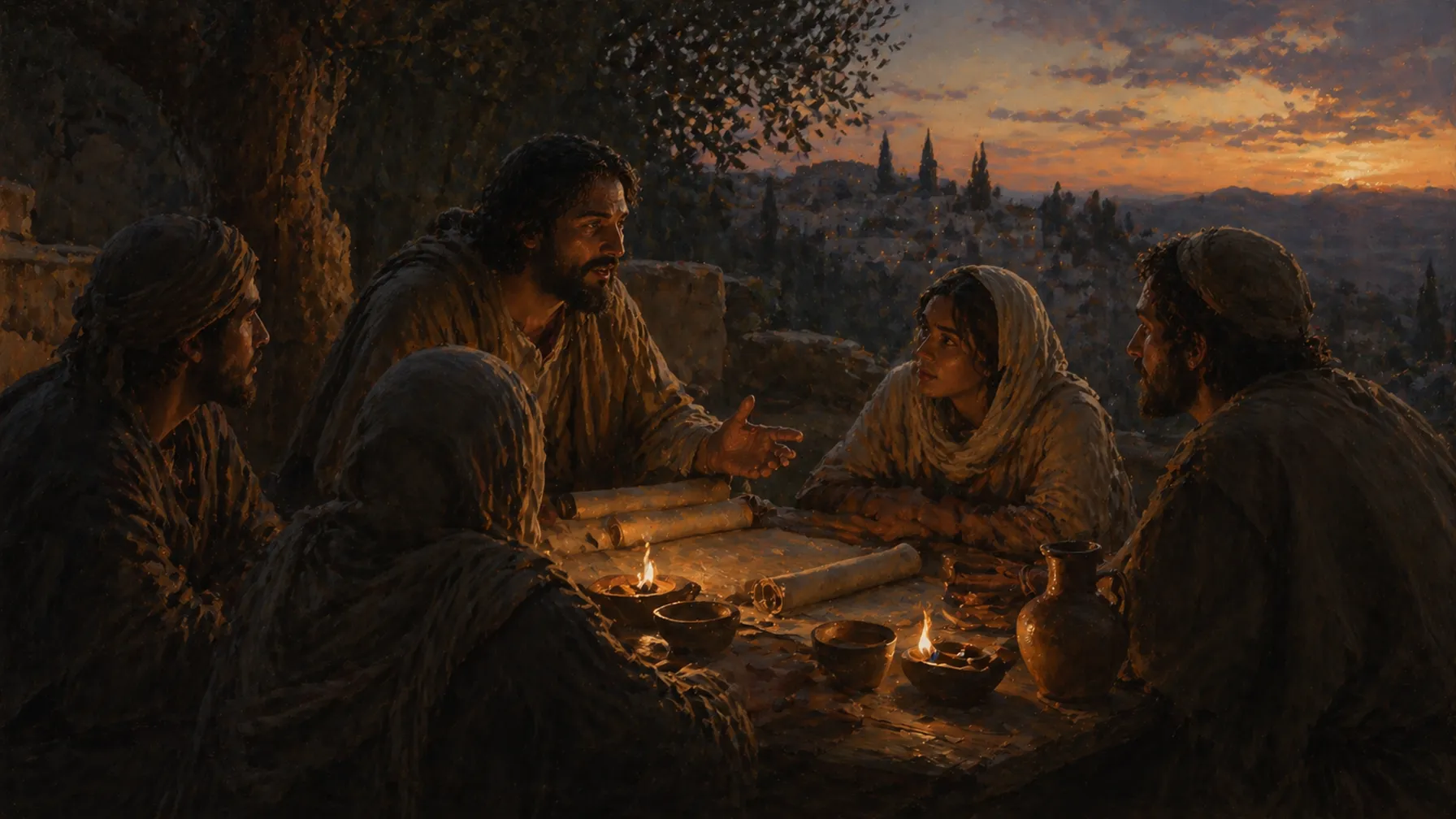
To lead a Bible study, choose one complete passage, prepare questions about what it says and means, then give the group time to read before discussing it. Finish with a response and prayer. James 1:19-27 works for a first meeting; the agenda below allows about thirty-five minutes.
Your first task as a Bible study leader is to help people read and discuss a passage together. You can prepare for that without having an answer to every question.
Use James 1:19-27 for a first meeting. It contains clear instructions, images worth discussing, and concrete examples of response. Read it yourself before gathering the group.
Prepare before the meeting
Read the passage twice. Write its main point in a sentence, then list one observation, one interpretive question, and one possible response. Check the James commentary after making your own notes.
If you are starting a group, agree on a time, an accessible meeting place, and how long you will meet. Tell people the passage beforehand. Choose a complete book to continue with, such as the sequence in the James study guide.
Ask people to respect privacy. Do not record a discussion or share someone's personal details without their permission.
A thirty-five-minute session
Give the reading room in the meeting
Read: 5 minutes
Open with a short prayer, read the passage aloud, and allow a quiet rereading.
Discuss: 20 minutes
Move from what the passage says to its meaning. Ask where an answer is supported.
Respond: 10 minutes
Invite a practical response, allow people to pass, and pray about what you read.
Ask three questions that send people back to the text
- What instructions repeat or connect in James 1:19-27? Let the group notice hearing, speaking, anger, and doing. Ask someone to identify a verse supporting their answer.
- What does the mirror illustration explain? Read verses 22-25 again before applying the image. Discuss how it exposes hearing without acting.
- What response follows from this paragraph? Verses 26-27 give concrete examples. Let each person choose a response rather than assigning one to somebody else.
You can ask a follow-up when the group jumps ahead: "How does that connect to the verse we just read?" Give people time to think. Silence does not always need filling.
Make space for different voices
If one person answers first every time, invite a quiet rereading and ask to hear from someone who has not spoken. Avoid putting a hesitant person on the spot with a personal question.
Let people pass. An answer about the text can be shared without a confession or a private story. Speak separately with someone who wants help with a sensitive matter.
When an interpretation seems unsupported, return to the passage: "What does the paragraph say before that sentence?" Explain a correction carefully. If you cannot resolve a question, write it down and investigate before the next meeting.
Choose a next session the group can follow
Continue with the next section in James, or choose a format that fits your readers: youth-group lessons, young-adult sessions, or a couples study.
Keep the same basic movement: read, explain, respond. The inductive study guide gives you a worked example for your own preparation. Protos can keep that preparation beside the passage, ready for the next meeting.
Sources
- James 1:19-27, Berean Standard Bible · The worked first-session passage.
- Robert Traina, Methodical Bible Study (Zondervan, 1952) · Questions move from observation to interpretation and application.
Terms in this article
Every passage each one appears in, with the definition attributed to its source.
Keep reading
Leading and Teaching
Gathered Worship
Ezra read the Law aloud and the people responded. What the gathered church does that private devotion cannot, across five ordinary elements.
Leading and Teaching
Elders, Deacons, Members
Elder, overseer and pastor are one office under three names. What Paul's qualification lists actually weigh, and how three polities differ.

Leading and Teaching
What the Church Is
Body, bride, household, temple. Four New Testament images for the church, and what each says that "I can worship anywhere" cannot.


