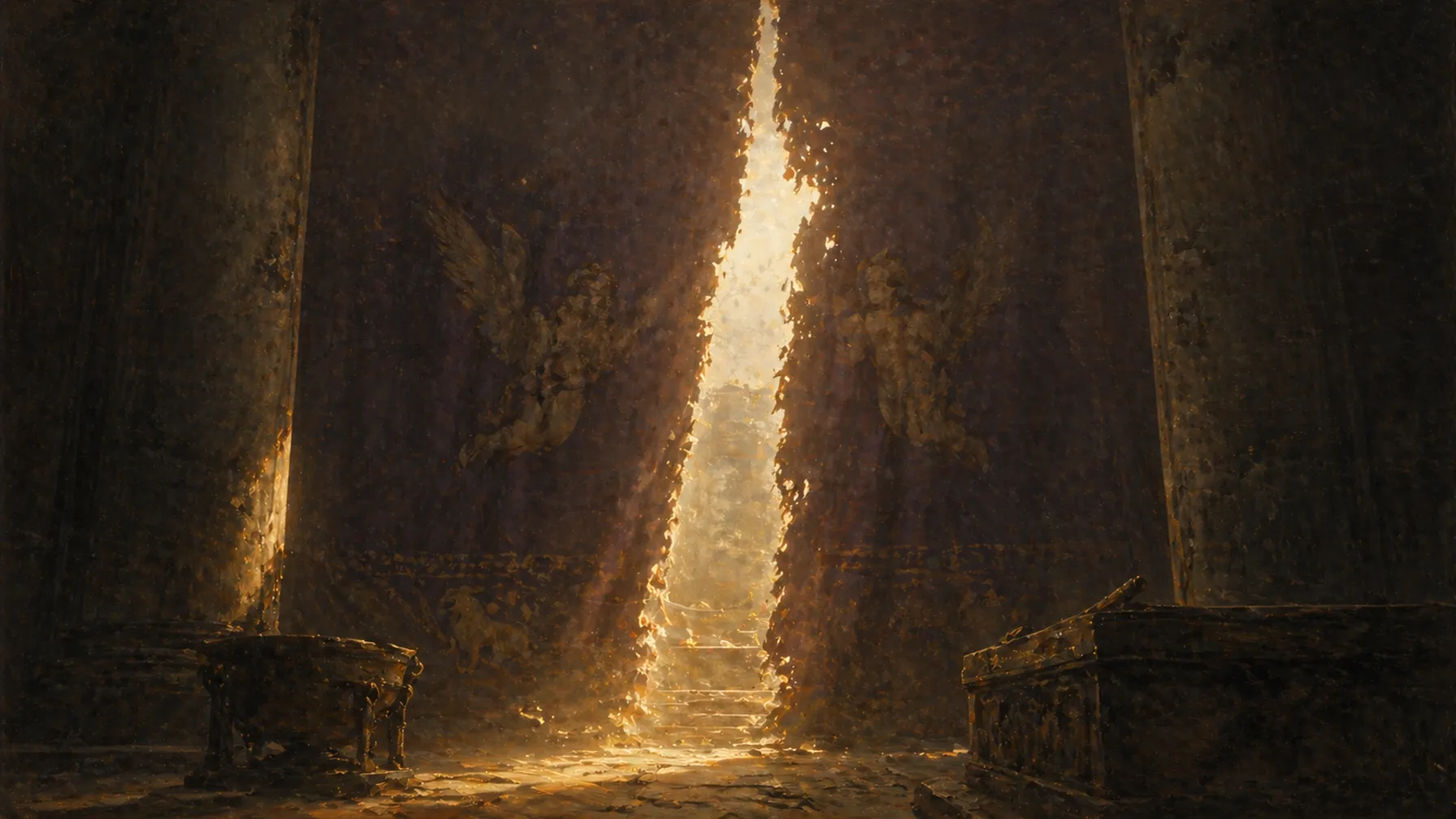
The temple theme traces God's presence through the whole canon. Eden was already a sanctuary where God walked with people. The tabernacle existed so he could dwell in their midst (Exodus 25:8), and the temple made that permanent until the glory departed. John says the Word pitched his tent among us, Paul calls believers God's temple, and Revelation 21:22 ends with no temple at all because God himself is it.
When the priests completed the dedication of Solomon's temple and stepped back, something happened that stopped them in their tracks. The glory of the Lord filled the house so completely that they could not stand to minister (1 Kings 8:10-11). They had built the building but had not summoned the presence. Something came that was not their doing. That moment raises the question the whole Bible answers: where does God dwell with his people, and how do they get access to him?
A garden that was already a sanctuary
Eden was not merely a pleasant park. God walked in it in the cool of the day (Genesis 3:8). The language of divine presence and communion was built into the first human home. When Adam and Eve sinned, the consequence was spatial: they were driven out and the way back was barred by cherubim and a flaming sword (Genesis 3:24). The same cherubim would later be woven into the curtain of the tabernacle and placed over the ark of the covenant. The architecture of Israel's worship was a recollection of Eden, marking the place where God's presence could be neared again.
A tent in the wilderness
When God gave instructions for the tabernacle, he named his purpose plainly: "let them make me a sanctuary, that I may dwell in their midst" (Exodus 25:8). The entire structure, its dimensions, its materials, its furniture, was organized around one reality: God residing among his people. When the tabernacle was completed, the same glory that would later fill Solomon's temple descended on it. Moses could not enter because the cloud settled on the tent and the glory of the Lord filled it (Exodus 40:34-35). The pattern of Eden was being rebuilt in the wilderness.
A permanent house and its loss
Solomon built the permanent house. At its dedication he acknowledged what every thoughtful worshiper understood: "But will God indeed dwell on the earth? Behold, heaven and the highest heaven cannot contain you; how much less this house that I have built!" (1 Kings 8:27). The temple was not God's address. It was the place he graciously agreed to make his name dwell.
Ezekiel watched the glory leave. In his vision, the divine glory rose from the cherubim, paused at the threshold, paused again at the east gate, and finally departed to the mountain east of the city (Ezekiel 10:4, 10:18-19, 11:23). The sequence is slow and deliberate. God did not abandon his people suddenly. But he left. And the exile that followed was the visible consequence of an invisible departure.
The Word tabernacled among us
John chose his word carefully. When the Son of God became flesh, John says he "dwelt among us" (John 1:14). The Greek is eskénosen: he pitched his tent, he tabernacled. The glory that departed in Ezekiel was returning in the person of Christ. When Jesus said "Destroy this temple, and in three days I will raise it up," John clarifies: "he was speaking about the temple of his body" (John 2:19-21). Jesus himself was now the place where God's presence could be met.
A building made of people
After Pentecost, the temple's location shifted again. Paul told the Corinthians: "Do you not know that you are God's temple and that God's Spirit dwells in you?" (1 Corinthians 3:16). Ephesians 2:21-22 extends it: the community of believers is growing "into a holy temple in the Lord," a dwelling place for God by the Spirit. The presence is no longer localized in stone or geography. It is distributed among the gathered people of God wherever they meet.
No temple in the city
Revelation 21:22 closes the arc with a striking detail: "I saw no temple in the city, for its temple is the Lord God the Almighty and the Lamb." There is no temple in the new Jerusalem because the whole city is the temple. The mediated access that the tabernacle, the temple, and the incarnation each provided has given way to unmediated presence. Eden is recovered and surpassed.
The whole story of Scripture, from the garden to the city, is God pursuing closer and closer dwelling with his people. This week, trace that arc from Exodus 25:8 to John 1:14 to Revelation 21:22 with your group and ask: what changes about each stage of the journey, and what stays the same?
Terms in this article
Every passage each one appears in, with the definition attributed to its source.
Keep reading
Reading the Bible
The Kingdom of God
Kingdom means reign, not territory. What already and not yet means in practice, and why the church is not the same thing as the kingdom.
Reading the Bible
Exile and Return
The Bible opens on a closed gate and closes on God dwelling with people. How exile and return shape the story from Genesis 3 to Revelation 21.
Reading the Bible
Are Proverbs Promises? Wisdom and Its Edges
A proverb is a reliable pattern, not a guarantee. How Proverbs, Job and Ecclesiastes argue with each other on purpose, and how to teach that faithfully.


