


Who was Pharaoh in the Bible?
Pharaoh, during the years in Egypt and the wilderness
This Pharaoh was the Egyptian ruler during the time of the Exodus (Exodus 3-14). Pharaoh appears in 207 verses across 14 books of the Bible.
The Bible uses the name Pharaoh for 6 different people. All 6 are below, each with its own passages.
Pharaoh in Exodus
This Pharaoh was the Egyptian ruler during the time of the Exodus (Exodus 3-14). When Moses and Aaron approached Pharaoh, demanding that he let the Israelites go, Pharaoh refused and increased their labor. God then sent a series of ten plagues upon Egypt, each time giving Pharaoh the opportunity to release the Israelites. However, Pharaoh repeatedly hardened his heart and refused to let them go until the tenth and final plague, the death of the firstborn. After the death of his own firstborn son, Pharaoh finally relented and allowed the Israelites to leave Egypt. However, he soon changed his mind and pursued them with his army. God parted the Red Sea for the Israelites to cross on dry land, but when the Egyptian army attempted to follow, the sea closed in on them, drowning Pharaoh and his forces (Exo.14.28; Psalm Exo.136.15). This Pharaoh is depicted as a stubborn and proud ruler who refused to acknowledge the power and authority of the God of Israel. His story serves as a reminder of God's sovereignty and His ability to deliver His people from oppression (Rom.9.17). The Bible does not provide the specific name or historical identity of this Pharaoh, but some scholars suggest that he may have been Amenhotep II, Thutmose III, or Ramesses II, based on the historical and archaeological evidence.
Definition text: STEPBible · Tyndale House Cambridge. Licensed CC BY 4.0. Lightly edited for length and formatting.
Compiled by Protos: the verse list on this page. Where one name belongs to more than one person or place, each of them gets a separate entry.
Pharaoh in Genesis

This Pharaoh was the Egyptian ruler during the time of Joseph, the son of Israel (or 'Jacob') (Genesis 37-50). Joseph was sold into slavery by his brothers and eventually served in the household of Potiphar, one of Pharaoh's officials. After being falsely accused and imprisoned, Joseph interpreted the dreams of Pharaoh's cupbearer and baker. When Pharaoh had troubling dreams, the cupbearer remembered Joseph's ability, and Joseph was brought before Pharaoh to interpret the dreams. Joseph interpreted Pharaoh's dreams as a warning of seven years of plenty followed by seven years of severe famine. Impressed by Joseph's wisdom, Pharaoh appointed him as second-in-command over Egypt to prepare for the famine. During the famine, Joseph's brothers came to Egypt to buy grain, and after a series of tests, Joseph revealed his identity to them. Pharaoh invited Joseph's family to settle in the land of Goshen and provided for their needs. This Pharaoh is depicted as a ruler who recognized and rewarded wisdom, and who showed kindness to Joseph and his family. The Bible does not provide the specific name or historical identity of this Pharaoh, as the term "Pharaoh" was used as a title for Egyptian kings. Some scholars suggest that this Pharaoh may have been from the Hyksos dynasty, a Semitic people who ruled Egypt during the Second Intermediate Period.
66 verses: Acts 7:10, Acts 7:13, Genesis 37:36, Genesis 40:2, Genesis 40:7, Genesis 40:11, Genesis 40:13, Genesis 40:14, Genesis 40:17, Genesis 40:19, Genesis 40:20, Genesis 40:21, and more
Definition text: STEPBible · Tyndale House Cambridge. Licensed CC BY 4.0. Lightly edited for length and formatting.
Pharaoh in Acts 7:21

This Pharaoh was the Egyptian ruler during the time of Moses' birth and early life (Exodus 1-2). Fearing the growing Hebrew population, Pharaoh enslaved the Israelites and subjected them to hard labor. He ordered the Hebrew midwives to kill any male infants born to the Israelites, but they disobeyed, claiming that Hebrew women gave birth too quickly. Pharaoh then commanded that all Hebrew male infants be thrown into the Nile River. During this time, Moses was born and hidden by his mother for three months. When she could no longer hide him, she placed him in a basket among the reeds of the Nile. Pharaoh's daughter discovered the baby and decided to adopt him, unknowingly hiring Moses' mother as his nurse. Moses grew up in Pharaoh's court, but he later fled Egypt after killing an Egyptian who was mistreating a Hebrew (Exo.2.11-15; Act.7.21-29; Heb.11.24-27). The Bible does not provide the specific name or historical identity of this Pharaoh, as the term "Pharaoh" was used as a title for Egyptian kings. Some scholars suggest that this Pharaoh may have been from the 18th or 19th Dynasty of the New Kingdom period, possibly Thutmose I, Thutmose II, or Amenhotep I, based on the historical and archaeological evidence of the Israelites' presence in Egypt.
11 verses: Acts 7:21, Exodus 1:11, Exodus 1:19, Exodus 1:22, Exodus 2:5, Exodus 2:7, Exodus 2:8, Exodus 2:9, Exodus 2:10, Exodus 2:15, Hebrews 11:24
Definition text: STEPBible · Tyndale House Cambridge. Licensed CC BY 4.0. Lightly edited for length and formatting.
Pharaoh in 1 Kings
This Pharaoh was the Egyptian ruler during the reign of King Solomon (1Ki.3.1; 9.16). Solomon made an alliance with Pharaoh and married his daughter, who brought the city of Gezer as a dowry. Solomon built a separate palace for Pharaoh's daughter (1Ki.7.8; 9.24; 2Ch.8.11) and included her among his many foreign wives (1Ki.11.1). The Bible also mentions that Hadad, an Edomite prince, fled to Egypt during David's reign and found favor with Pharaoh, who gave him land and provisions and arranged for him to marry the sister of Queen Tahpenes (1Ki.11.18-20). Hadad's son Genubath was raised in Pharaoh's court (1Ki.11.20). The specific identity of this Pharaoh is not provided in the Bible. However, based on the historical and archaeological evidence, some scholars suggest that he may have been Siamun or Psusennes II, rulers of the 21st Dynasty of Egypt, which was contemporary with Solomon's reign.
10 verses: 1 Kings 3:1, 1 Kings 7:8, 1 Kings 9:16, 1 Kings 9:24, 1 Kings 11:1, 1 Kings 11:19, 1 Kings 11:20, 1 Kings 11:22, 2 Chronicles 8:11, Song of Songs 1:9
Definition text: STEPBible · Tyndale House Cambridge. Licensed CC BY 4.0. Lightly edited for length and formatting.
Pharaoh in Isaiah
This Pharaoh was the Egyptian ruler during the reign of King Hezekiah of Judah (2Ki.18.21; Isa.36.6). When Judah was threatened by the Assyrian Empire, Hezekiah sought an alliance with Egypt, hoping to receive military support. However, the prophet Isaiah warned against relying on Egypt, comparing Pharaoh's support to a broken reed that would pierce the hand of anyone who leaned on it (Isa.36.6). Isaiah also prophesied against Egypt, mocking the wisdom of Pharaoh's counselors and predicting that their advice would lead Egypt astray (Isa.19.11-14). He warned Judah not to seek refuge in Egypt or rely on Pharaoh's protection (Isa.30.2-3). The specific identity of this Pharaoh is not provided in the Bible. However, based on the historical and archaeological evidence, some scholars suggest that he may have been Shabaka or Shebitku, rulers of the 25th Dynasty of Egypt (Nubian Pharaohs), who were contemporary with Hezekiah's reign and engaged in conflicts with the Assyrian Empire.
5 verses: 2 Kings 18:21, Isaiah 19:11, Isaiah 30:2, Isaiah 30:3, Isaiah 36:6
Definition text: STEPBible · Tyndale House Cambridge. Licensed CC BY 4.0. Lightly edited for length and formatting.
Pharaoh in Genesis 12:15
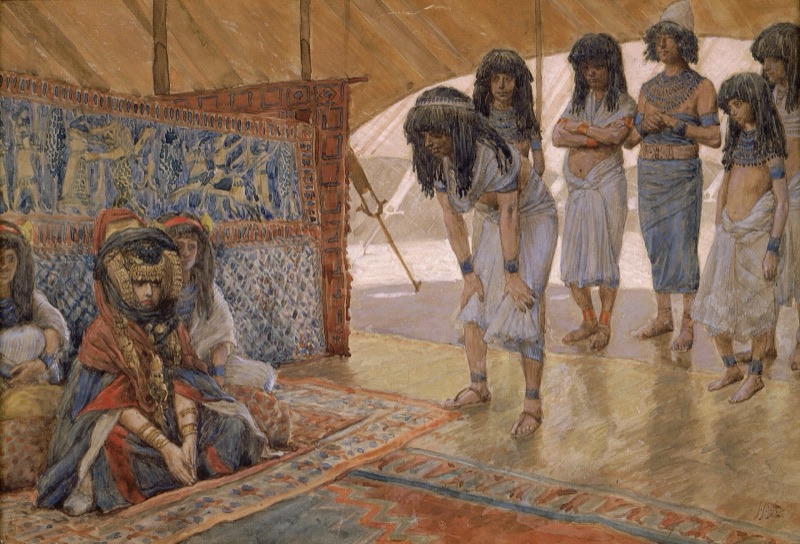
This Pharaoh was the Egyptian ruler during the time of Abraham's visit to Egypt (Gen.12.10-20). When Abraham and his wife Sarah entered Egypt, Abraham asked Sarah to say that she was his sister, fearing that the Egyptians would kill him to take her, as she was very beautiful. As a result, Pharaoh took Sarah into his palace, believing her to be unmarried. However, God afflicted Pharaoh and his household with plagues because of Sarah. Pharaoh, realizing that Sarah was Abraham's wife, rebuked Abraham for his deception and sent them away with wealth and possessions. The Bible does not provide the specific name or historical identity of this Pharaoh, as the term "Pharaoh" was used as a title for Egyptian kings.
4 verses: Genesis 12:15, Genesis 12:17, Genesis 12:18, Genesis 12:20
Definition text: STEPBible · Tyndale House Cambridge. Licensed CC BY 4.0. Lightly edited for length and formatting.
Where does Pharaoh appear in the Bible?
Pharaoh is referenced in 207 verses across 14 books. Every passage below is about this one, not just every verse the word turns up in.
- 1 Samuel 2:27
- 1 Samuel 6:6
- 2 Kings 17:7
- Deuteronomy 6:21
- Deuteronomy 6:22
- Deuteronomy 7:8
- Deuteronomy 7:18
- Deuteronomy 11:3
- Deuteronomy 29:2
- Deuteronomy 34:11
- Exodus 3:10
- Exodus 3:11
- Exodus 4:21
- Exodus 4:22
- Exodus 5:1
- Exodus 5:2
- Exodus 5:5
- Exodus 5:6
- Exodus 5:10
- Exodus 5:14
- Exodus 5:15
- Exodus 5:20
- Exodus 5:21
- Exodus 5:23
Showing the first 24 of 207.
Open all 207 references in ProtosWhat else appears in these passages?
These turn up in the same passages as Pharaoh.
Common questions
How many people in the Bible are called Pharaoh?
Pharaoh refers to 6 different people in the Bible: Pharaoh in Exodus; Pharaoh in Genesis; Pharaoh in Acts 7:21; Pharaoh in 1 Kings; Pharaoh in Isaiah; Pharaoh in Genesis 12:15.
How many times does the Bible mention Pharaoh?
Pharaoh appears in 207 verses across 14 books, most often in Exodus, which accounts for 106 of them.
Which books of the Bible mention Pharaoh?
Exodus, Genesis, 1 Kings, Deuteronomy, Isaiah, Acts, 1 Samuel, Psalms, and 6 more.
Where can I read every verse about Pharaoh?
This page lists 24 of them. Protos carries all 207, and opens this entry on the verse you are reading rather than in a separate tab.


