


Greek Rule in Judea
Follow Alexander from Macedon to the Levant, then explore Greek rule in Judea through the Maccabean revolt.

Select a name on the map or choose a stop below.

1 of 7 · Alexander's campaign · 334 BCE
Macedon
Alexander begins from Macedon, the kingdom he inherited from Philip II. The pin marks Pella, the Macedonian capital.
The movement is schematic. The line connects selected campaign stops. It shows how Macedonian power reached the Levant. It leaves out many stops and does not claim a march through Jerusalem.
Take the map to your next study
Illustration, geographic reference and Scripture passages.
Places and events on the map
Alexander's campaign
1Macedon
334 BCE
Alexander begins from Macedon, the kingdom he inherited from Philip II. The pin marks Pella, the Macedonian capital.
2Crossing into Asia
334 BCE
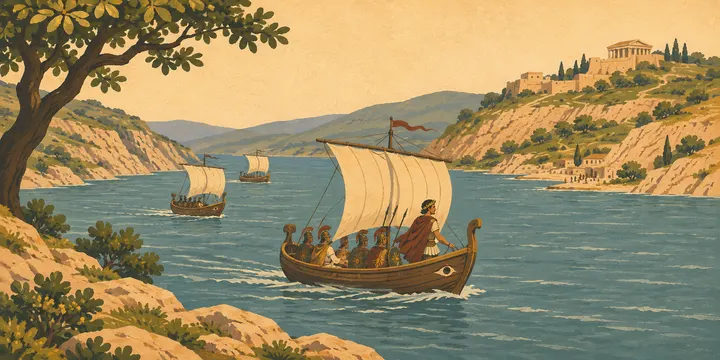
In 334 BCE Alexander crosses the Hellespont into Persian-controlled Asia Minor.
3Battle of the Granicus
334 BCE
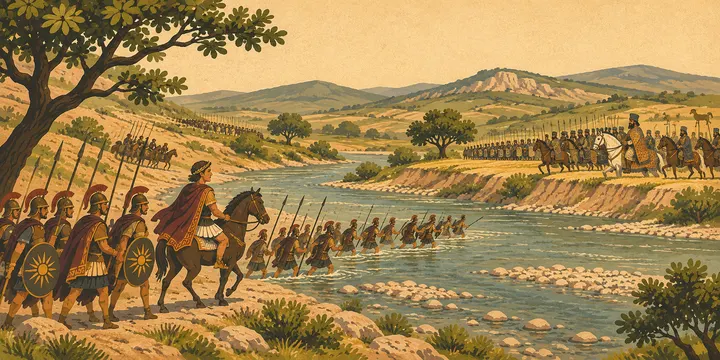
Alexander defeats a Persian force at the Granicus River. The pin marks the approximate battlefield area.
4Battle of Issus
333 BCE
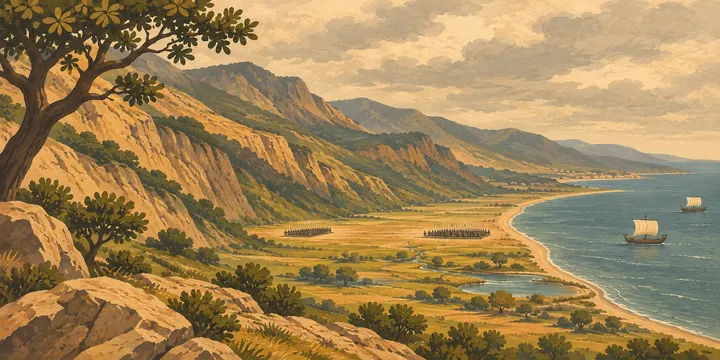
In 333 BCE Alexander defeats Darius III near Issus. He then turns south along the eastern Mediterranean coast.
5The siege of Tyre
332 BCE
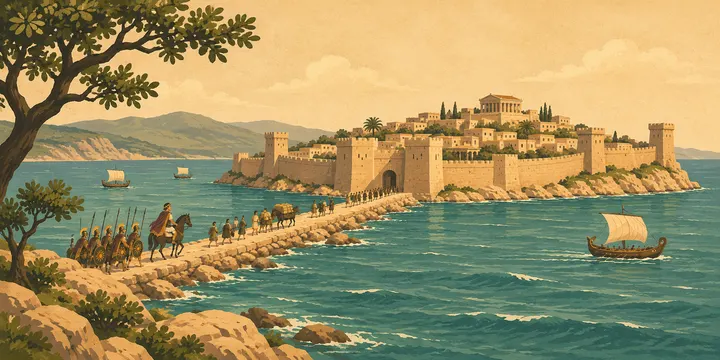
Alexander takes the island city of Tyre in 332 BCE after a siege, securing another major port on the Levantine coast.
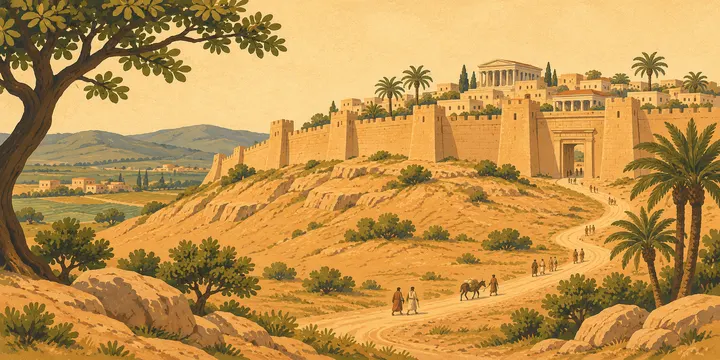
6The siege of Gaza
332 BCE
Alexander takes Gaza on the coast south of Judea before advancing into Egypt.
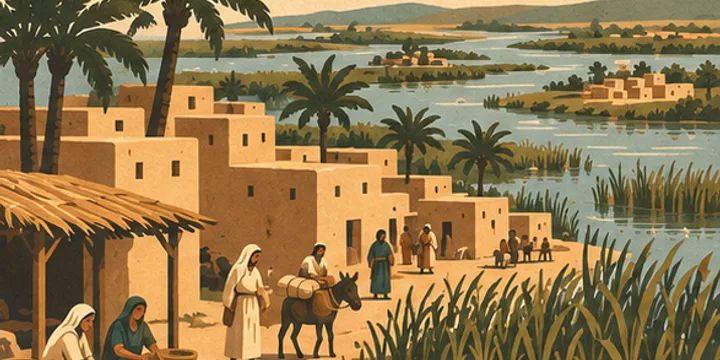
7Alexander enters Egypt
332 BCE
After Gaza, Alexander enters Egypt through Pelusium. Judea was part of the wider region brought under Macedonian rule.
Greek rule in Judea
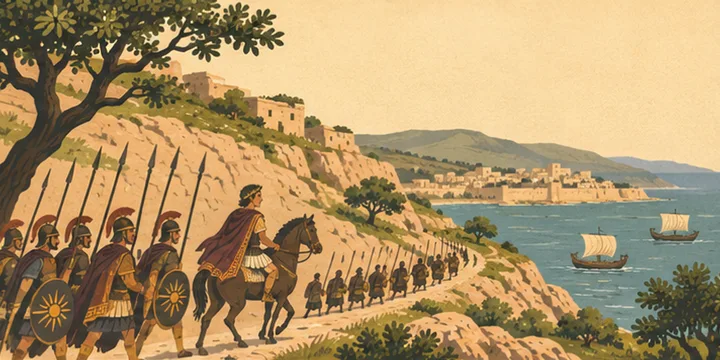
1Alexander ends Persian rule
Alexander's conquests bring the region under Macedonian rule. After his death, Judea comes under the Ptolemies, who rule from Egypt.
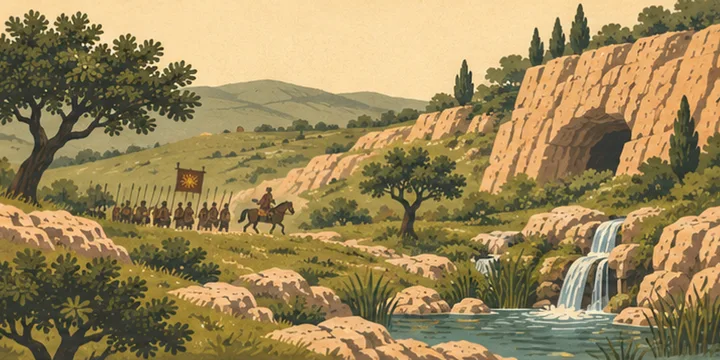
2Seleucid rule begins
c. 200 BCE
Around 200 BCE, Antiochus III defeats Ptolemaic forces near Panium. Judea passes from Ptolemaic to Seleucid control.
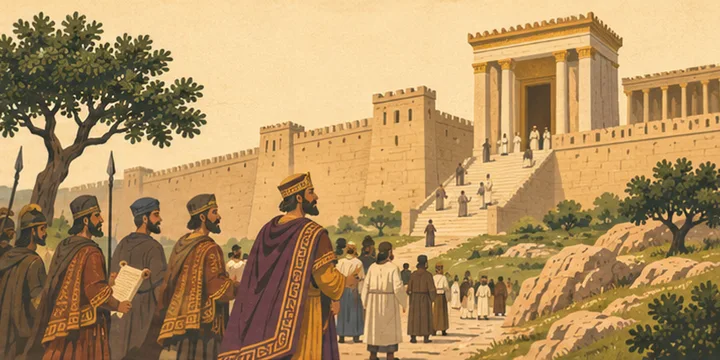
3Antiochus IV targets the Temple
167 BCE
In 167 BCE, Seleucid decrees restrict Jewish worship and the Jerusalem Temple is desecrated.
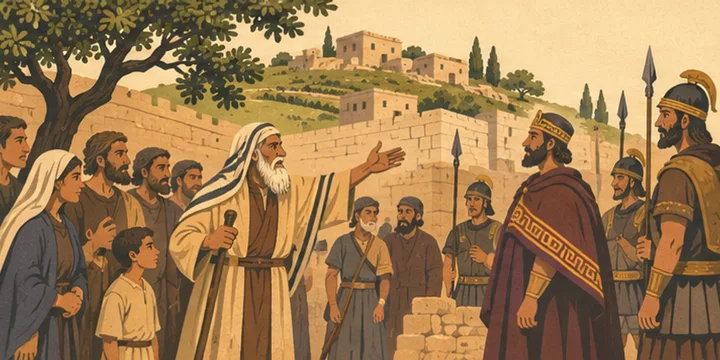
4Revolt begins at Modein
Mattathias refuses a royal order to sacrifice and calls others to resist. The pin marks the approximate area of ancient Modein.
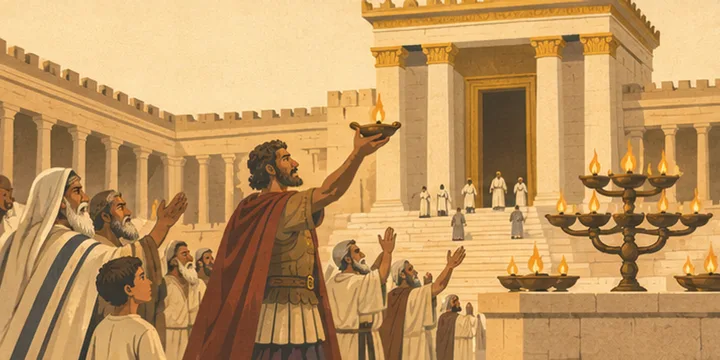
5The Temple is rededicated
164 BCE
In 164 BCE, Judas Maccabeus and his followers rededicate the Temple in Jerusalem. The event is remembered at Hanukkah.
6Hasmonean self-rule
Under Simon, Judea gains independence from Seleucid rule. Hasmonean self-rule lasts until Roman intervention.
March to Jerusalem
1Battle near Beth-zur
Judas and his forces confront Lysias near Beth-zur. The marker indicates the approximate area, not the battlefield's exact location.
2The Temple is rededicated
164 BCE
After the battle, Judas and his forces go up to Jerusalem to purify and rededicate the Temple.
FAQ
What period does the Greek rule map cover?
It follows Judea from Alexander's conquest through Ptolemaic and Seleucid rule, the Maccabean revolt, and Hasmonean self-rule.
Which event connects the map to Hanukkah?
First Maccabees 4 recounts the rededication of the Temple in Jerusalem. Hanukkah commemorates that event.
What routes can I choose on the map?
The map has one route for Alexander's campaign and a second for later Greek rule in Judea, including the Maccabean revolt.
Why does this map cite 1 Maccabees?
The map uses 1 Maccabees as a historical source for the revolt and the Temple rededication. The book's place in the biblical canon varies by tradition.
Sources
- The painted landscape is schematic.
- This map cites 1 Maccabees as an ancient Jewish historical source for the period between the Testaments. Protestant Bibles generally place it outside the Old Testament canon, while Catholic Bibles include it.
- Natural Earth. Coastline data.
- OpenBible.info. Biblical place identifications and source notes.
- Cambridge University Press: Alexander’s campaign chronology
- 1 Maccabees 4: Historical source
- Beth-zur site identification


